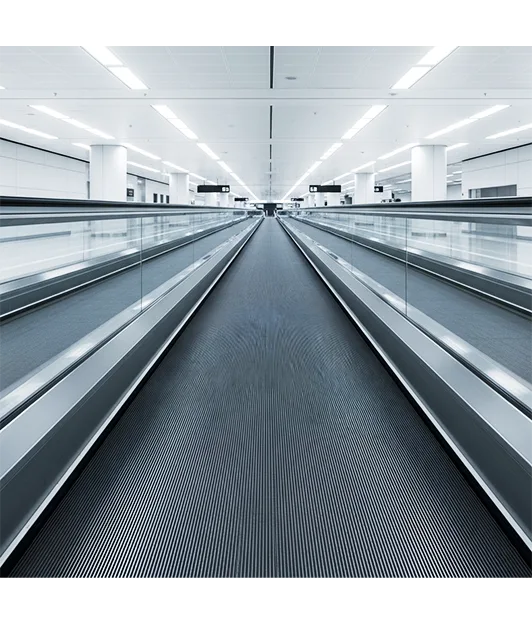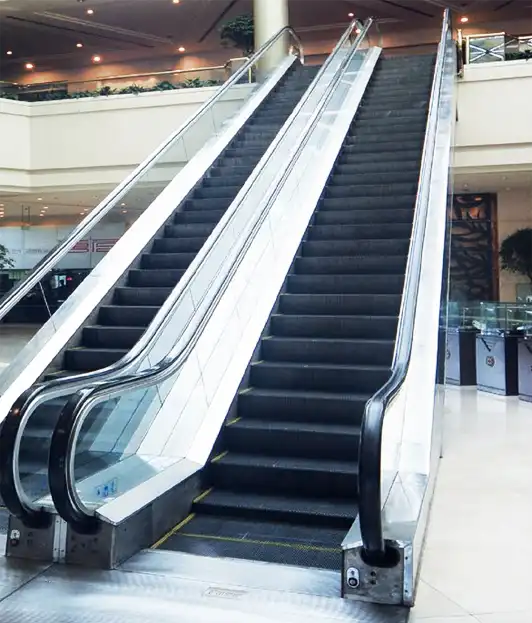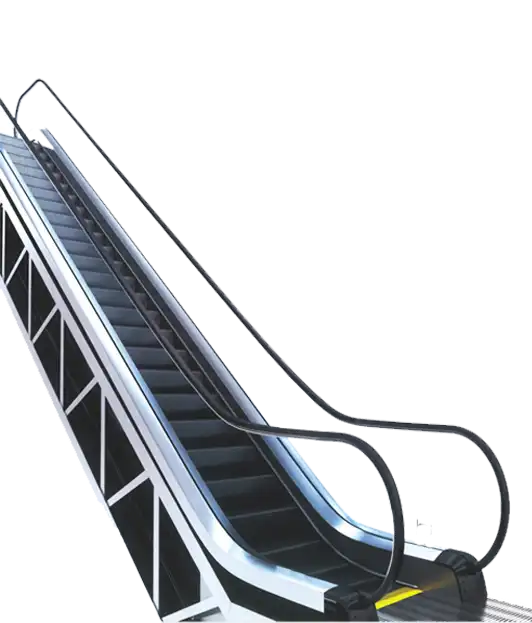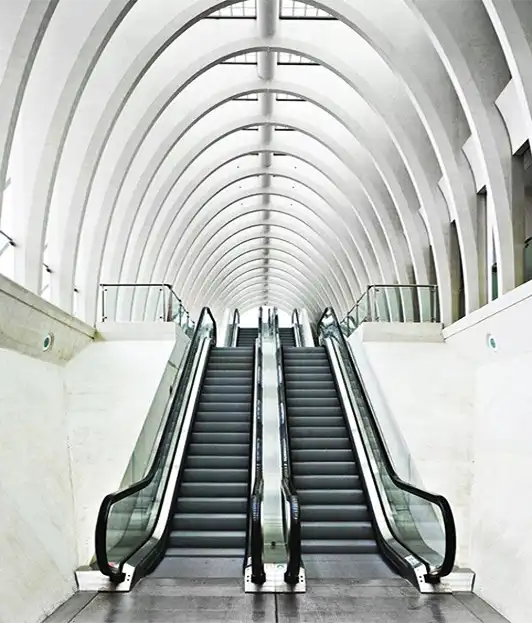

Inclined & Horizontal Moving Walk Way Solutions
Model: FE-M03
Configurations:
| Specification | Typical Range / Value |
|---|---|
| Working Length | 2 m – 200+ m (modular) |
| Clear Width | 800, 1000, 1200, 1600, 2000+ mm |
| Incline | 0° – ~12° (commonly ≤6°) |
| Speed | 0.5 – 0.75 m/s (horizontal) |
| Throughput | ~1,600 – 9,000 ppl/hr (estimate) |
| Drive & Control | AC motor + VFD |
Product Details
Inclined & Horizontal Moving Walk Way Solutions
Q / A — common questions about the industry and moving walk ways
Q1 — What’s the difference between a moving walk way and an escalator?
A: A moving walk way is a flat or gently inclined conveyor that moves people horizontally; an escalator is a moving staircase that transports people vertically. Walkways connect distances; escalators change floors. Both should be integrated with elevators for full accessibility.
Q2 — Can a moving walk way carry luggage and trolleys?
A: Standard moving walkways handle light luggage and wheeled suitcases. For heavier carts or trolleys, check the manufacturer’s load rating. For regular freight or heavy loads, use freight elevators or dedicated conveyors.
Q3 — How energy-efficient are moving walkways?
A: Efficiency depends on motor types, VFD control, and traffic patterns. Modern systems with VFDs, standby modes, and occupancy sensors are significantly more energy-efficient than older designs.
Q4 — Are moving walk ways safe for children and mobility-impaired users?
A: Yes, if standard safety features are present and proper signage and transition details are provided. Mobility-impaired users often still rely on elevators, but properly designed walkways with adequate width and gentle transitions can assist many users.
Q5 — How long does installation take?
A: Installation time varies with length, site conditions, and integration complexity. Small modular runs may be installed in days to a few weeks; long concourses or inclined systems require more planning and longer installation windows.
Q6 — Do moving walkways require a lot of maintenance?
A: They require regular but routine maintenance: inspections, lubrication, component checks, and control tests. High-quality components and scheduled service make upkeep straightforward and predictable.